
Wedding Songs for Dancing: How to Build a Packed Dance Floor in 2026
Key Takeaways
Choosing wedding songs for dancing is not about building a 1,000-track spreadsheet. It is about selecting the right first dance song, a confident grand entrance anthem, and enough proven floor-fillers to keep your wedding guests dancing from the first beat to the final chorus.
- You only need a focused wedding playlist: around 10–20 must-plays, 10–20 do-not-plays, and a wider pool your DJ can adapt from.
- Banker tracks like “I Wanna Dance With Somebody”, “Dancing Queen”, “Can’t Stop the Feeling!” by Justin Timberlake, and “Footloose” by Kenny Loggins still work when they are played at the right moment.
- A professional wedding DJ and MC can read the room, switch genres smoothly, and balance requests with your taste.
- The best dance wedding songs bridge generations, mixing classics, nostalgic throwbacks, and modern hits.
- With Celebrations with Alan Marshall, couples plan their wedding music playlist through a client portal, supported by personalised music planning and a great dance floor experience across Hampshire.
Why Your Wedding Songs for Dancing Matter More Than You Think
Guests may forget the centrepieces. They rarely forget whether they wanted to get up, whether they “wanna dance”, and how the dance floor felt at 10:30pm.
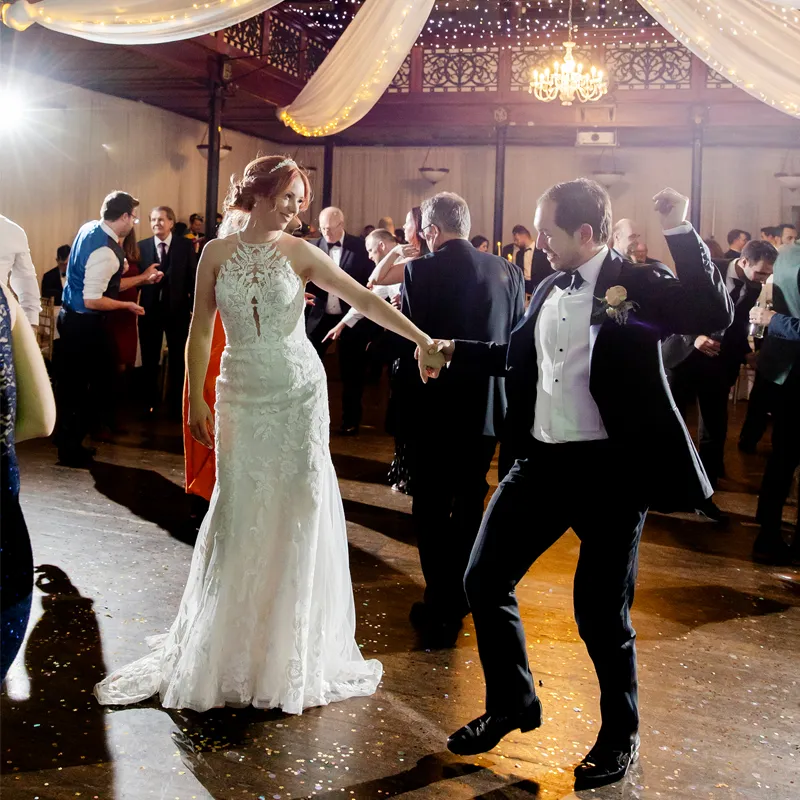
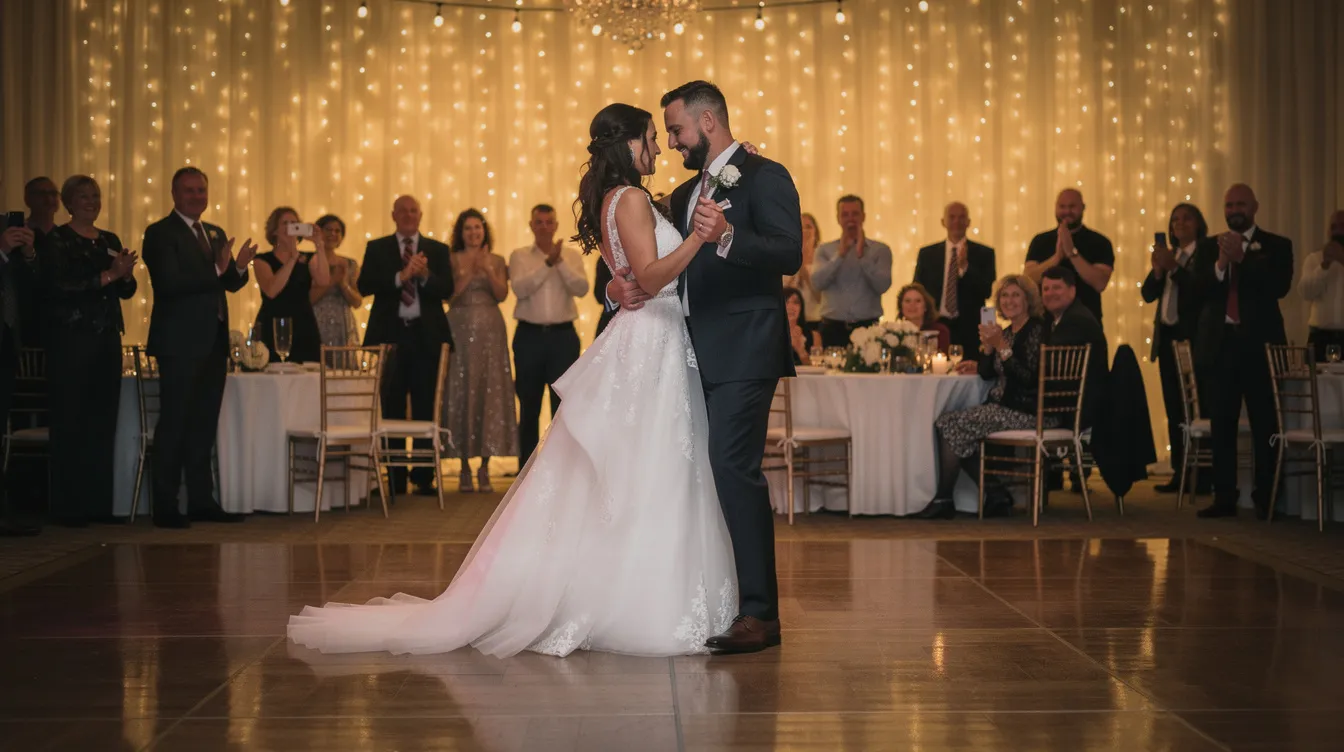
The right wedding songs shape the whole mood of your evening. Your grand entrance sets the energy. Your first dance creates the emotional centrepiece. Your wedding reception songs then carry everyone from polite applause to guests singing with their arms around each other.
At a 2025 Hampshire barn wedding, the room was quiet after the first dance. A few couples were hovering at the edge, unsure whether to join in. We dropped “Can’t Stop the Feeling!” by Justin Timberlake, invited the wedding party in first, and within 30 seconds the floor was full. That is the difference between a playlist and a DJ who understands people dancing in real time.
Celebrations with Alan Marshall works as a wedding DJ, master of ceremonies, and, where required, wedding celebrant. That matters because the music is not separate from the day. It connects the ceremony, speeches, cake cutting, first dance, and evening party into one smooth experience.
This guide is written from practical UK wedding experience, especially Hampshire weddings, not generic playlist theory.
How Many Wedding Songs Do You Really Need for Dancing?
Most Hampshire and UK evening receptions run from around 7.30pm to midnight. That gives you roughly 4–4.5 hours of music, including the first dance, party songs, requests, announcements, and the final anthem.
A typical 4-hour wedding reception set includes around 70–90 tracks, though many wedding DJs will only play 2–3 minutes of some songs to keep the energy high. UK DJ planning guides often estimate around 60–80 songs for a 4-hour set, depending on mixing style, announcements, and song length.
You do not need every song you have ever liked. You need enough structure for your DJ to understand you, and enough flexibility for them to react to the room.
Practical Wedding Playlist Planning Structure
A practical planning structure looks like this:
- Must-play songs: 10–20
Your personal favourites and key moments - Play-if-possible songs: 40–80
Useful inspiration for the DJ - Do-not-play songs: 10–20
Songs, artists, or genres you really dislike - Wider DJ pool: 120–150
Enough choice to adapt on the night
With Celebrations with Alan Marshall, couples can add must-plays, maybes, and do-not-plays into the online client portal. That gives us a clear picture of your taste while still allowing live decisions when the wedding guests respond differently than expected.
Building Your Wedding Playlist: From First Dance Song to Last Anthem
A strong wedding playlist has a flow. It is not just a pile of favourite dance songs. It should move through the evening naturally, from background atmosphere to your last big sing-along.
Typical Wedding Playlist Structure
- Chilled background music during room turnaround or evening guest arrival.
- Grand entrance song for the couple or wedding party.
- First dance song.
- Optional parent dances.
- Opening party run of 5–10 high-energy tracks.
- Peak-time bangers, nostalgic throwbacks, requests, and sing-alongs.
- A final song that gives the night a memorable ending.
Classic Songs for Early Evening
Older guests tend to leave earlier in the night, so it is advisable to play classic songs early in the reception. Consider these crowd-pleasers:
- Stevie Wonder – “Signed, Sealed, Delivered”
- Elvis Presley
- “September” by Earth, Wind & Fire
- “Sweet Caroline” by Neil Diamond
- Chuck Berry
Grouping by Genre
It is also recommended to group songs by genre rather than by era to create a seamless flow in the playlist. For example:
- Motown and Soul Run:
Move from Stevie Wonder to The Supremes, then into Phil Collins or Natalie Cole. - Rock Run:
Transition from Bryan Adams to Bon Jovi, then into Guns N’ Roses or “Mr. Brightside”.
That usually works better than jumping randomly from Elvis Presley into Calvin Harris, then back to Dolly Parton, then into Arctic Monkeys.
Key Moments and Song Ideas
Think in moments, not just tracks:
| Moment | Example song ideas |
|---|---|
| Sing-along moment | “Sweet Caroline”, “Don’t Stop Believin’”, “Livin’ on a Prayer” |
| Hands-in-the-air moment | “We Found Love”, “Titanium”, “Break Free” |
| Family-friendly pop moment | “Can’t Stop the Feeling!”, “Shut Up and Dance” |
| Retro fun moment | “Footloose”, “Great Balls of Fire”, “Pretty Woman” |
| Slow dance reset | A short run of love songs, not a long downtempo block |
“Don’t Stop Believin’” by Journey is often chosen as the final song of the night at weddings, creating a memorable sing-along moment for guests. It works because almost everyone knows when to join in.
Tips for Maintaining Dance Floor Momentum
- Keep slow dances to a minimum to maintain momentum on the dance floor during weddings.
- One or two well-placed slow songs can be beautiful.
- A long, slow section can empty the room.
At Celebrations with Alan Marshall, we normally begin with an initial planning chat 6–9 months before the wedding day. Then, in the final month, we refine the running order, your chosen wedding music, and our suggested transitions.
Floor-Fillers: Wedding Songs That Always Get Guests Dancing
Every crowd is different, but some wedding party songs consistently work across Hampshire and the wider UK when used at the right time.
The ultimate wedding dance playlist bridges generations by mixing universally recognised classics with modern sing-alongs. To keep energy high at weddings, mix timeless classics, high-energy sing-alongs, and nostalgic throwbacks.
Top Wedding Dance Floor-Fillers
Here are reliable floor-fillers:
- “I Wanna Dance With Somebody” by Whitney Houston – Universal sing-along and instant lift
- “Dancing Queen” by ABBA – Multi-generation favourite
- “Footloose” by Kenny Loggins – Retro fun and easy movement
- “Can’t Stop the Feeling!” by Justin Timberlake – Family-friendly party energy
- “9 to 5” by Dolly Parton – Cheeky, joyful, country-pop
- “September” by Earth, Wind & Fire – Disco classic
- “Don’t Stop Me Now” by Queen – High-energy rock-pop
- “Mr. Brightside” by The Killers – Late-night indie anthem
- “Shut Up and Dance” by Walk The Moon – Modern power pop
- “Blinding Lights” by The Weeknd – 80s-style modern hit
- “We Found Love” by Rihanna featuring Calvin Harris – Big dance-pop release
- “Don’t Start Now” by Dua Lipa – Younger guest crowd-pleaser
More Song Ideas for Your Playlist
- Spice Girls
- “Single Ladies” by Beyoncé
- Lady Gaga
- Black Eyed Peas
- Backstreet Boys
- Donna Summer
- Michael Jackson
- Jennifer Lopez
- Pointer Sisters
- Bill Medley
- “Midnight Train to Georgia”
- “Digital Love” by Daft Punk
“I Wanna Dance With Somebody” by Whitney Houston is a feel-good song that is guaranteed to get everyone on the dance floor at weddings, making it a popular choice for party playlists.
“Dancing Queen” by ABBA is a timeless classic that remains a favourite at weddings, encouraging guests of all ages to dance.
“We Found Love” by Rihanna featuring Calvin Harris has been a staple on wedding playlists since its release in 2011, known for its ability to get guests singing and dancing together.
“Blinding Lights” by The Weeknd is a modern wedding favourite that channels 80s energy, making it a popular choice for getting guests on the dance floor.
“Don’t Start Now” by Dua Lipa is a guaranteed crowd-pleaser at weddings, appealing especially to younger guests with its upbeat tempo.
“Shut Up and Dance” by Walk the Moon is a power pop love song that has earned a place in modern wedding playlists due to its catchy chorus and danceable beat.
A quick note on guest requests: people often write titles in shorthand. Someone might ask for dance with somebody whitney, september earth wind fire, stop til, hurry love, or dance walk the moon. A good DJ knows what they mean and can decide whether it fits the moment.
And if you hate a classic? That is fine. If “Sweet Caroline”, “Come On Eileen”, or “Dancing Queen” makes you wince, put it on the do-not-play list. There are always alternatives.
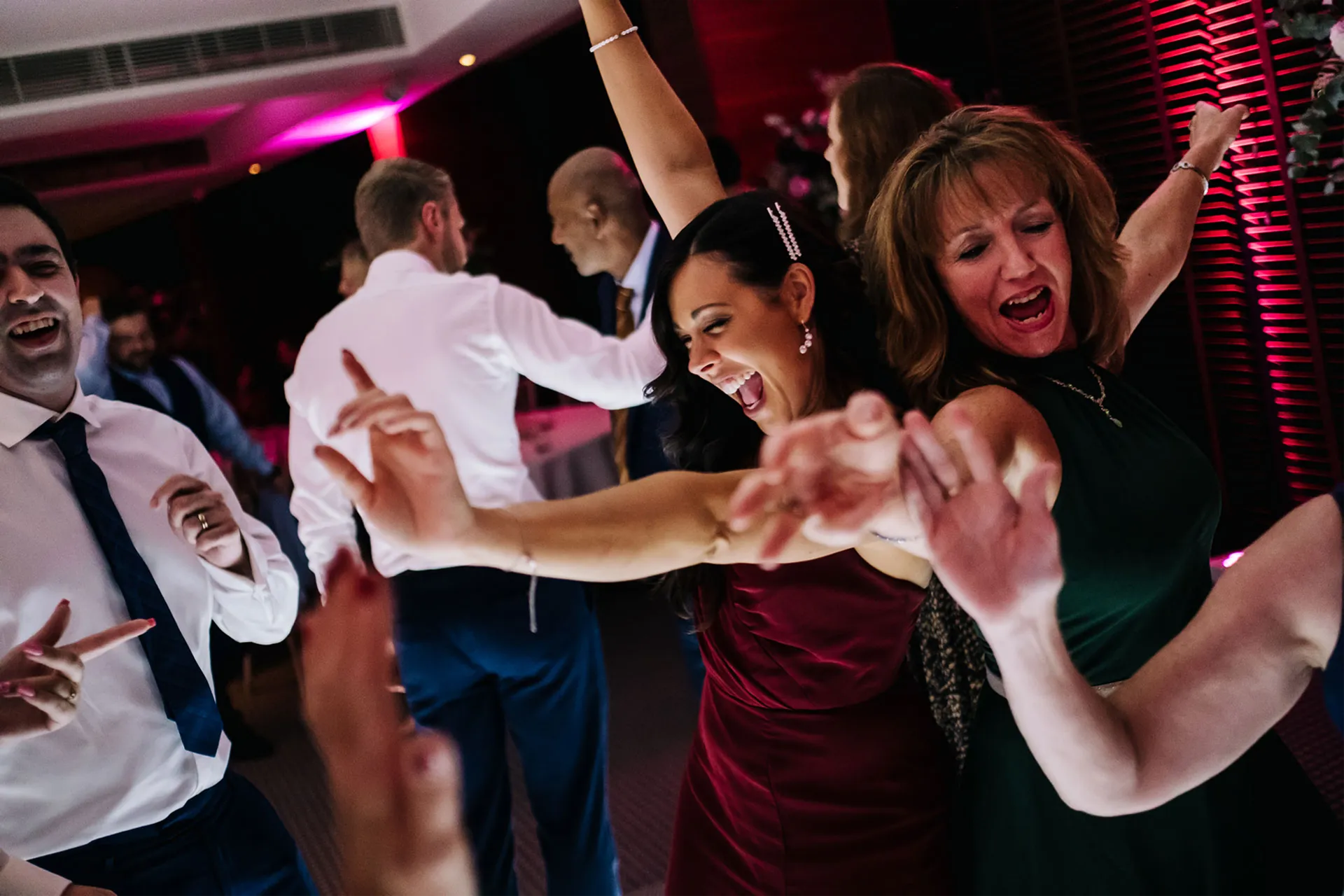
Reading the Room: Keeping Your Dance Floor Full All Night
The secret to a packed dance floor is not a fixed list. It is live decision-making.
A professional wedding DJ watches the age mix, who is dancing, who is sitting out, and who is almost ready to join. If modern pop is not working, the next move might be a 70s disco run. If Motown has brought parents and grandparents forward, it may be time to bridge into 80s pop, then 90s R&B, then modern hits.
DJ Tips for Maintaining Energy Waves
A typical pattern might be:
- 4–5 high-energy tracks.
- One mid-tempo sing-along.
- A short reset.
- Another build into bigger party songs.
Avoid long downtempo sets to prevent lulls in the dance floor activity at weddings. Slow songs are useful, but they work best as short emotional pauses, not 20-minute blocks.
Guests are more likely to follow the newlyweds to the dance floor if they see them dancing and enjoying themselves. If all my friends see you both laughing, singing, and pulling people in, the room relaxes.
Seamless mixing matters too. If a track is not landing, a DJ can fade quickly and move on. If it is working, they can extend the vibe and build a mini-set around it.
Using Announcements to Encourage Guests
As MC, Alan can also use friendly announcements to include specific groups:
- “Let’s get all the aunties up for this one.”
- “University friends, this is your moment.”
- “Parents and grandparents, we need you on the floor.”
Those small prompts can turn hesitant guests into guests dancing confidently.
Making It Personal: Must-Plays, No-Gos, and Special Dedications
Your wedding party playlist should feel like your story, not a generic Saturday night.
Creating Your Must-Play List
Start with a concise must-play list. These might include:
- The song from your first holiday.
- A guilty-pleasure boyband track.
- A tune you always sing in the car.
- A family favourite.
- A song that reminds you of someone important.
Building Your Do-Not-Play List
Then create a do-not-play list. Include:
- Songs you dislike
- Artists you would rather avoid
- Explicit tracks that feel wrong with children and grandparents present
- Genres that simply do not suit your evening
Special Dedications
Dedications are powerful when used sparingly. For example:
- A Dolly Parton song for a country-loving mum
- An Elvis Presley rock’n’roll track for a grandad
- A Neil Diamond chorus for the uncle who always leads “Sweet Caroline”
- A Stevie Wonder track for parents who met in the 70s
Celebrations with Alan Marshall’s client portal lets you flag songs as “must play”, “play if possible”, and “do not play”. That gives structure without tying the DJ’s hands and reflects the personalised, well-reviewed DJ experience couples can expect.
How Celebrations with Alan Marshall Helps You Curate the Perfect Wedding Playlist
Celebrations with Alan Marshall is a bespoke wedding DJ, MC, and celebrant service based in Hampshire and working across surrounding counties.
Full-Day Wedding Music Planning
We help couples plan music for the whole day, not just the evening party. That can include:
- Ceremony entrance and exit music
- Signing the register
- Drinks reception atmosphere
- Wedding breakfast background music
- Grand entrance
- First dance
- Parent dances
- Evening wedding reception songs
- Final anthem
Planning Support and Enhancements
Planning support includes:
- A detailed pre-wedding consultation
- An online client portal
- Timeline building
- Practical suggestions for your wedding music based on the venue, guest mix, and timings
We can also enhance the atmosphere with:
- Uplighting to match your colour scheme
- Illuminated LOVE letters
- A selfie wizard that encourages dance floor photos to be shared in real time
If you are considering live wedding bands or a wedding band for part of the night, we can coordinate handovers so the sound and schedule feel smooth. DJs and bands can work brilliantly together when the timing is planned properly.
We also offer a money-back guarantee and Trading Standards–approved reassurance and place a strong emphasis on client satisfaction. That matters if you have been to weddings where the music felt generic, the MC was awkward, or the night never quite got going.
If you are planning a 2026 or 2027 wedding in Hampshire or nearby, get in touch for a relaxed, no-obligation chat about your date, your style, and the kind of night-long celebration you want to create.
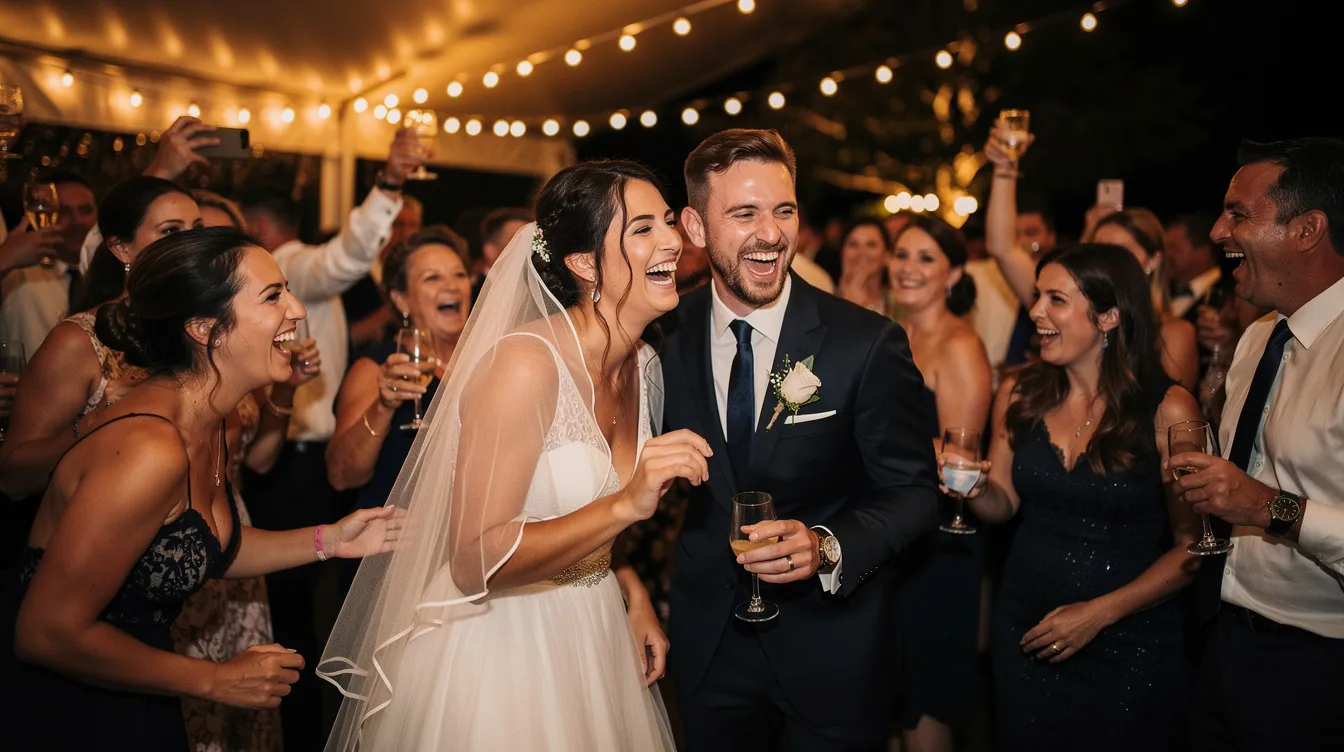
Wedding Dance Floor FAQs
How early should we open the dance floor at our wedding?
In the UK, a common pattern is speeches and cake by around 8.00–8.30pm, first dance between 8.30–9.00pm, and then straight into the first party set.
Opening too late can lose momentum. Guests may drift to the bar, older relatives may leave, and the room can become harder to restart. Opening just after dessert usually works well because people still have energy.
As MC, Alan can help time speeches and formalities so the first dance leads seamlessly into the party.
Should we do a father–daughter or mother–son dance as well?
These dances are optional. They can be traditional, relaxed, funny, emotional, or skipped completely.
If parents feel shy, 90–120 seconds is often enough. The DJ can fade the song and invite other couples onto the floor so it becomes a shared family moment rather than a spotlight performance.
Suitable choices might include a classic soul ballad, a country track, a gentle pop song, or something personal from your family history.
What if our guests don’t usually dance?
Even “non-dancing” crowds can be encouraged with the right approach.
Use recognisable choruses, simple beats, and sing-along anthems rather than opening with heavy club music. Motown, disco, classic pop, and well-known wedding songs often work well because they feel safe and familiar.
A good DJ will test the room gradually rather than forcing one style. The aim is to make people comfortable first, then build energy.
Can we mix live music with a DJ for our wedding dancing?
Yes. Many couples choose a live band earlier in the evening and a DJ to carry the party to midnight. Others choose a DJ all night with a live sax player, percussion